

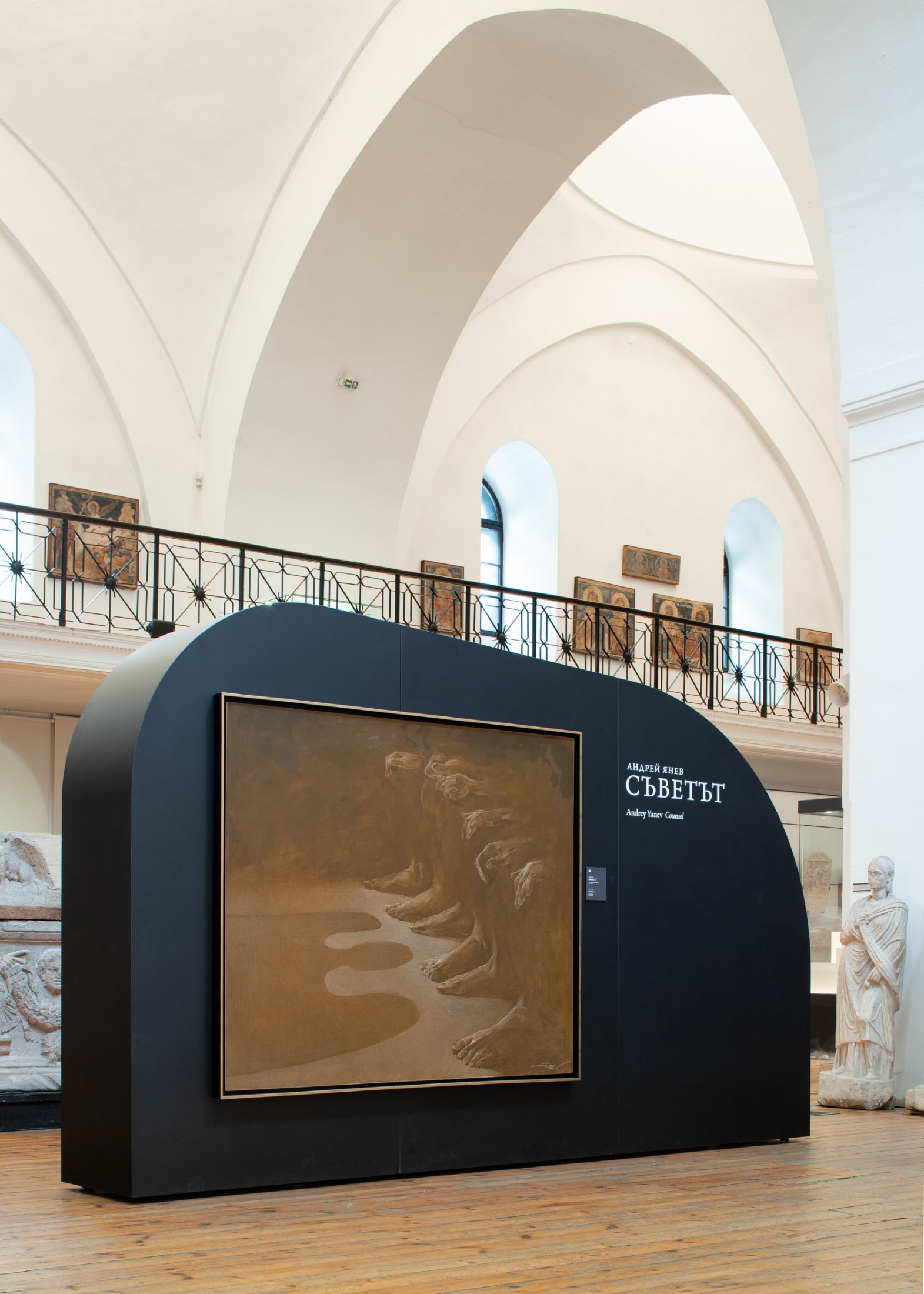
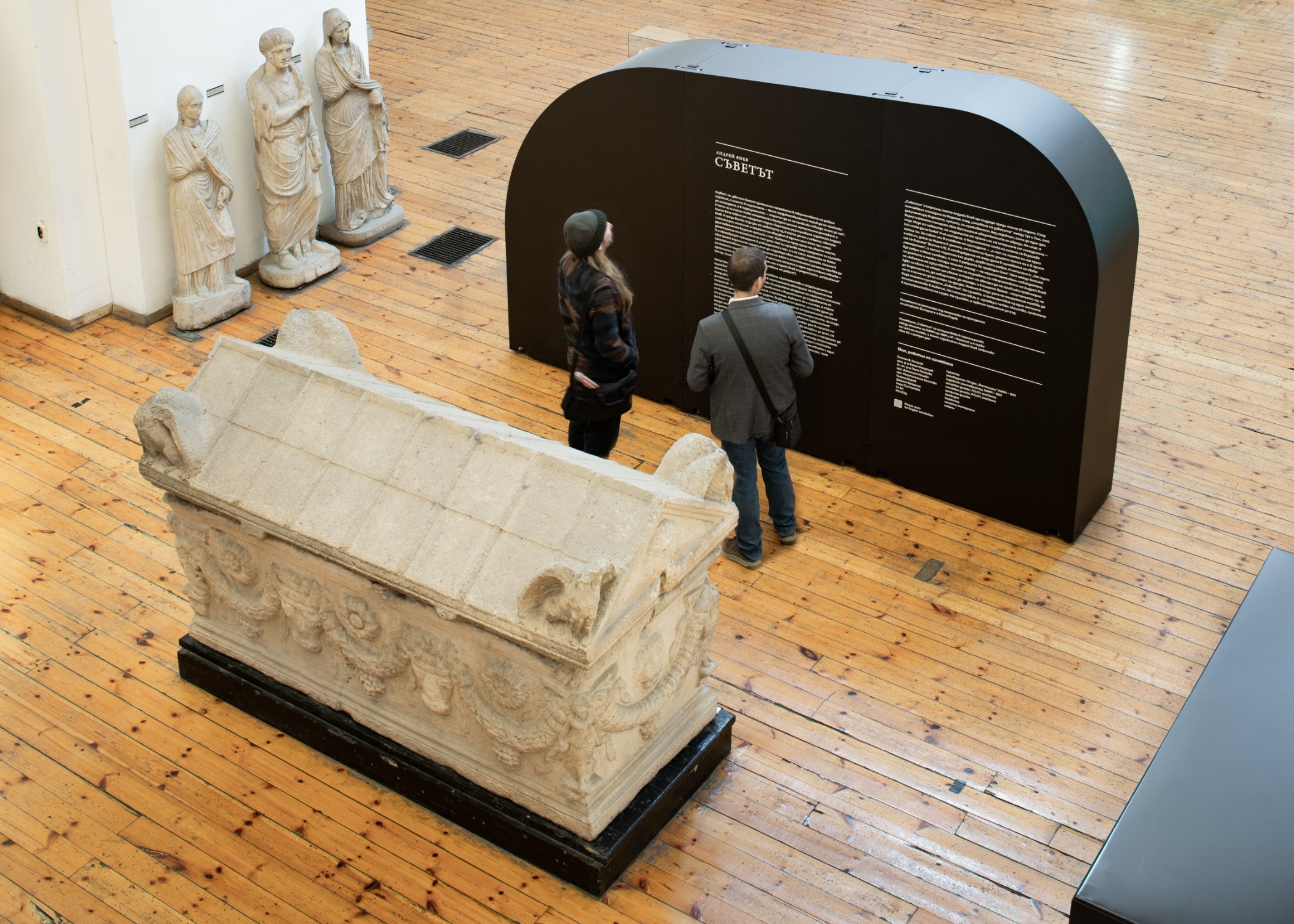
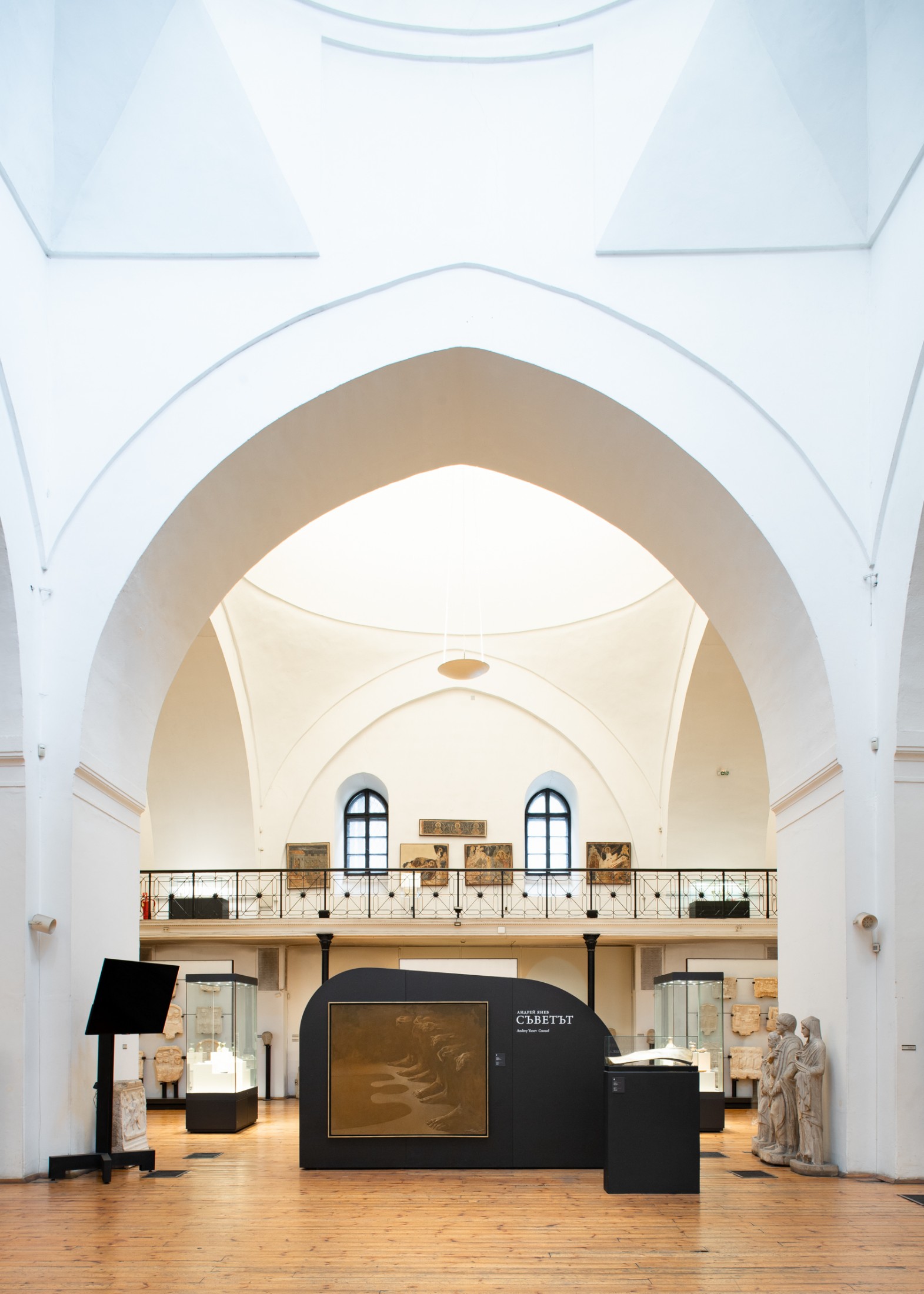
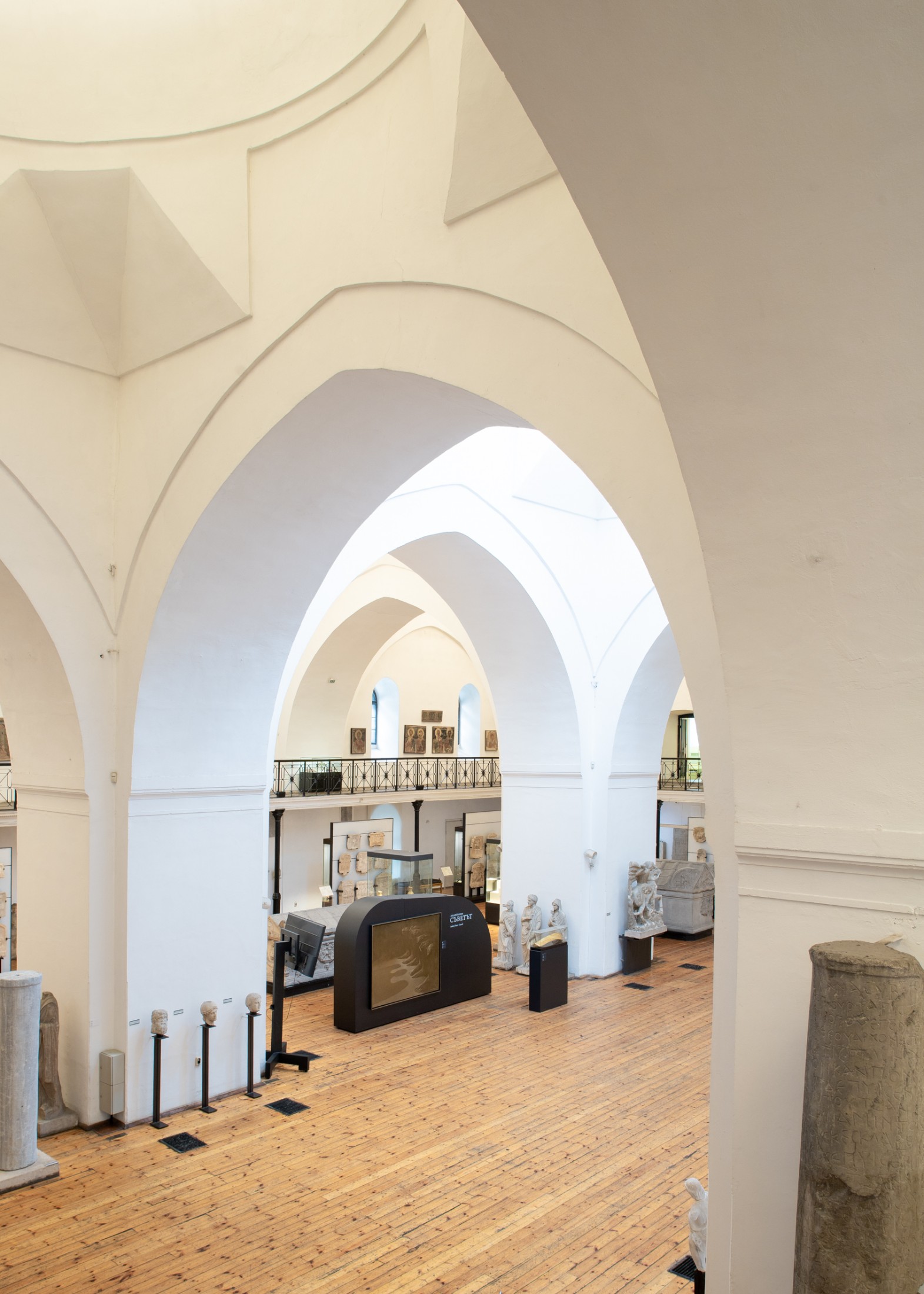
A transformable autonomous exhibition body commissioned by the Art Gallery – Kazanlak is a favorite artifact of our studio team, developed in one of the areas of architecture and design that excite us – exhibition design.
The client’s task was very specific from a functional point of view – to create an autonomous exhibition element that would initially house an “exhibition of one painting”, located in the space of the National Archaeological Museum in Sofia, allowing the work to stand in its own semantic field among the artifacts in the museum, but at the same time to communicate harmoniously with the existing exhibition and atmosphere. Additional points of the pragmatics of the assignment are the requirement for physical stability of the exhibition furniture, a certain degree of dismountability and mobility that does not compromise the artistic appearance of the product, and the possibility for one side of the product to function as an exhibition stand for books and other small objects and to continue its life, both in the space of the gallery itself in the city of Kazanlak, and in other locations in the case of traveling works.
Regarding the image, materiality and architectural specifics of the product, the client provided us with complete creative freedom, for which we are grateful. The body was conceived as the first in a family of exhibition bodies and during the development process in collaboration with the gallery team and the team of carpenters from 912 OOD, who produced it, it acquired the joking and affectionate name “the mammoth”, reflecting its natural and affectionate nature.
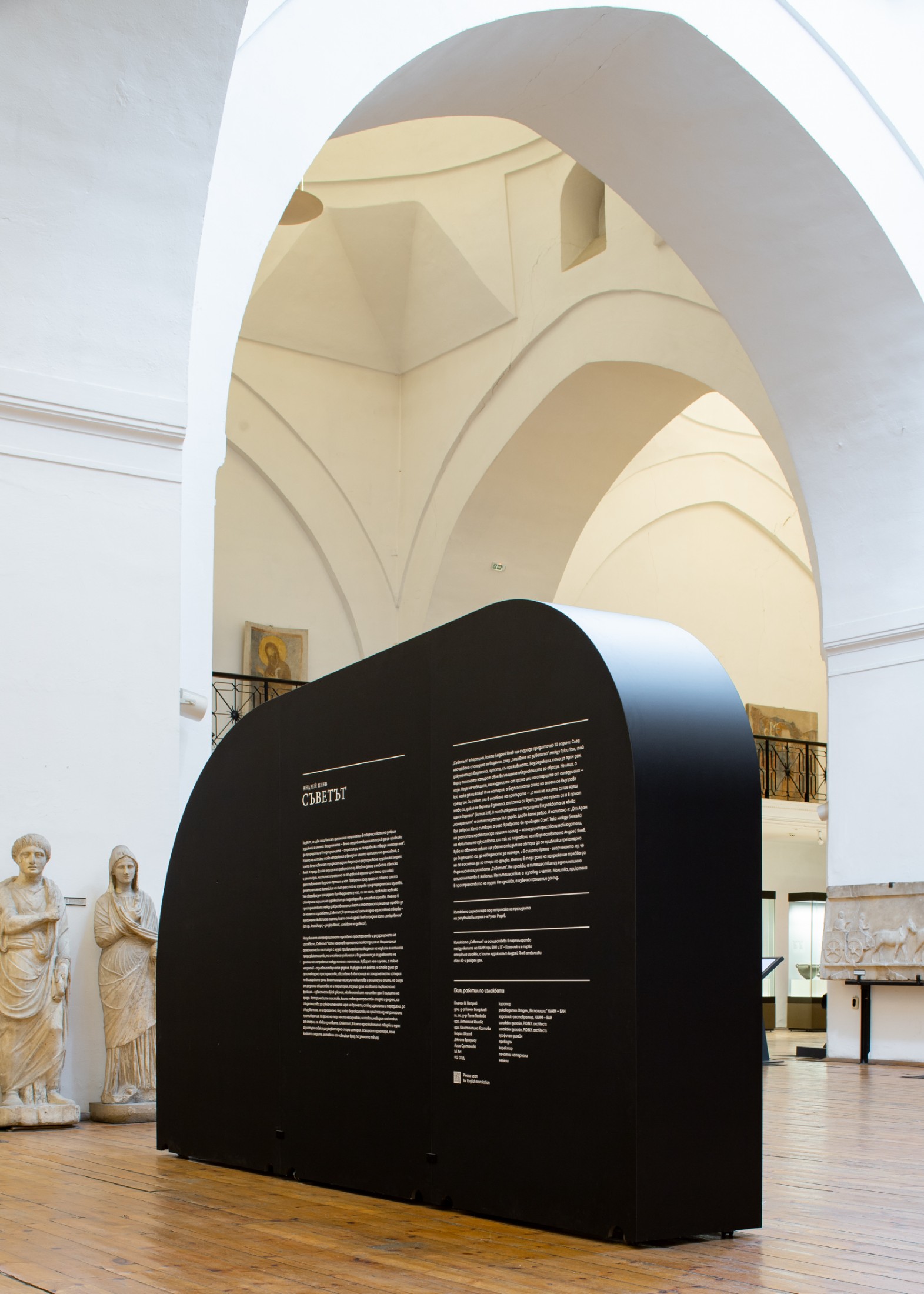
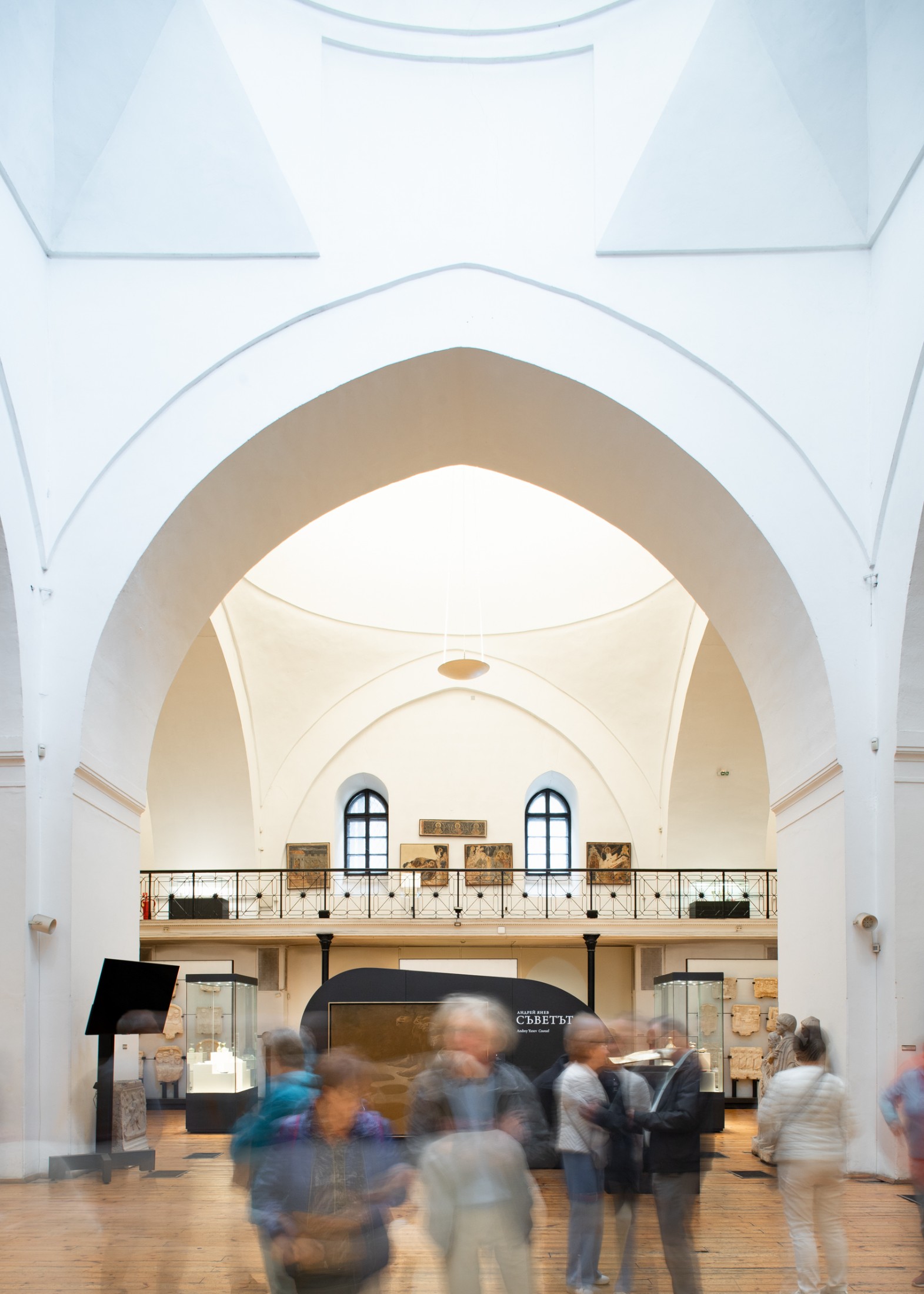
The exhibition volume is situated in the space as an autonomous architectural element – a movable wall-artifact, which simultaneously structures the viewing and rearranges the horizons of the hall. The furniture is placed freely in the central axis of the space, while at the same time entering into a conscious dialogue with the architectural elements characteristic of the space – arches and domes, and with the historical artifacts around it – the stone sarcophagus and the sculptural figures. In this way, the body sounds like a contemporary counterpoint to the architectural-historical and archaeological-exhibition matter in the specific location of its premiere.
Its rounded silhouette reduces the form to an almost abstract sign, to a black obelisk, which is similar in its mystery to the one from Arthur C. Clarke’s “2001: A Space Odyssey”, and which stands on the border between object and architectural barrier, giving its presence a slightly mystical character, while its functional logic remains unconditionally pragmatic.
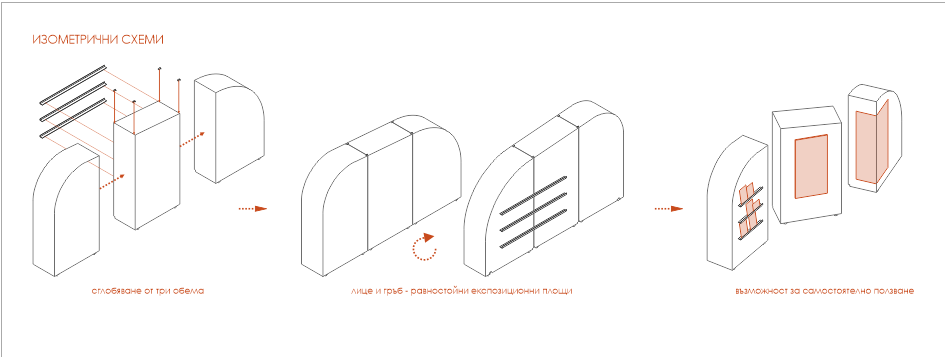
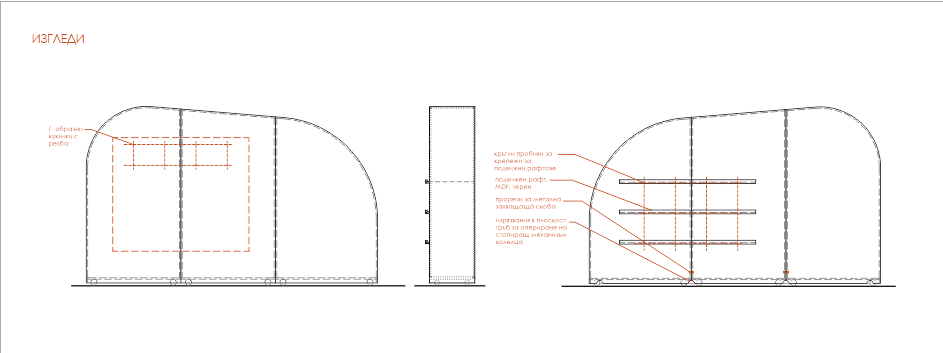
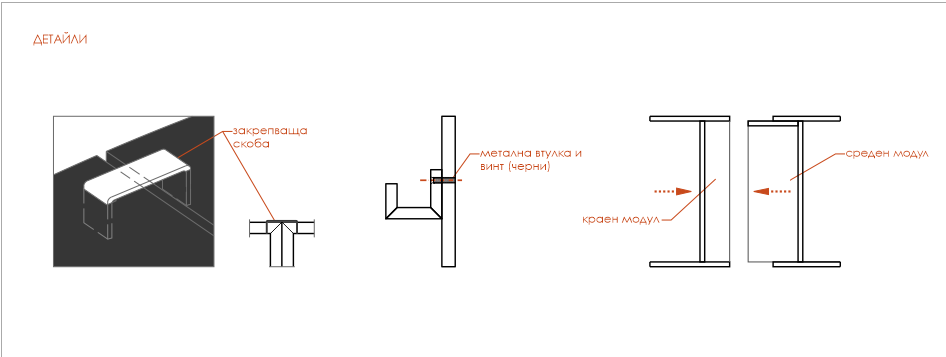
Constructed on a system of wheels with stoppers hidden under its “skirts”, the element has a high degree of mobility, which allows flexible reconfiguration, but also secure fixation in the chosen position. The furniture body is disassembled into three parts, which facilitates its transportation, storage and adaptation to different spatial scenarios. Hidden fastening systems are integrated on the back, which, if necessary, activate an additional “facade” layer – an opportunity to exhibit smaller objects such as books, photographs and other artifacts on one side of the volume. All assemblies and details are made of gerung, which reinforces the abstract and mysterious nature of its image.
Thus, the object functions simultaneously as a carrier of text and information, as a flexible carrier for exhibits and as a spatial instrument that models the visual axes and the rhythm of movement in the space in which it finds itself.